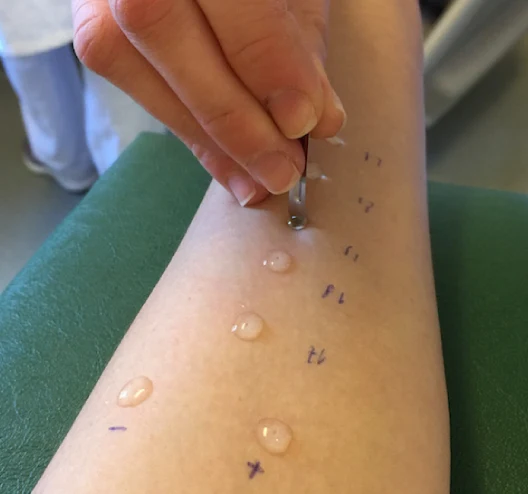
Types of Allergy Skin Tests:
- Prick/Puncture Test: A small amount of the suspected allergen is applied to the skin with a plastic device that pricks the surface.
-
Intradermal Test: A diluted allergen is injected just beneath the skin using a very fine needle.
After the test, the skin is monitored for about 15 minutes for any reactions. The appearance of a red, raised bump (known as a “wheal”) and surrounding redness (the “flare”) indicates an allergic reaction. The size of the reaction correlates with the severity of the allergy.
How Skin Tests Are Performed:
Skin tests are conducted by allergists in their office. Two common types of tests are:
- Prick or Scratch Test: A small amount of allergen is placed on the skin, which is then pricked or scratched to allow it to enter the skin. This test is often done on the forearm for adults and the back for children.
-
Intradermal Test: A small amount of allergen is injected just below the skin, commonly used for testing allergens like insect stings.
What to Expect During the Skin Test:
The procedure usually involves testing for a variety of allergens. It takes approximately 5 to 10 minutes to apply the allergens, and you will wait for 15 minutes to observe any reactions. Some mild discomfort or slight itching may occur if you're sensitive to any of the allergens.
Preparation for the Test:
- Inform your allergist of all medications you're taking, including over-the-counter drugs.
-
Discontinue antihistamines 3 to 7 days before the test (ask your allergist for specific instructions). Nasal steroid sprays and asthma medications typically do not interfere with the test, but always confirm with the allergist beforehand.
Is the Test Safe?
Skin testing is generally safe, as only small amounts of allergens are used. While severe reactions are rare, the allergist will monitor for any adverse effects during the test.
Understanding the Results:
- Positive Reaction: If you're allergic to an allergen, a small red bump (wheal) will form at the test site, which may itch. The larger the bump, the more sensitive you may be to the allergen.
-
Negative Reaction: If no reaction occurs, it means you’re not allergic to the tested substance, though this doesn’t rule out other allergies or conditions.
Even if a skin test shows an allergy, it doesn’t guarantee a future allergic reaction when exposed to the substance. Your allergist will review your medical history along with the test results to determine the best course of action.
Next Steps After the Test:
If your skin test indicates allergies, your allergist will develop a treatment plan, which may include:
- Avoidance: Reducing exposure to allergens (e.g., eliminating dust mites or avoiding pet dander).
-
Medications: Antihistamines, nasal sprays, or eye drops to manage symptoms.
-
Allergy Shots (Immunotherapy): For patients who cannot avoid allergens, allergy shots may be recommended. These injections contain gradually increasing doses of the allergen to desensitize the immune system over time, helping to alleviate symptoms and reduce inflammation associated with conditions like hay fever and asthma.
Who Performs Allergy Testing?
Allergy tests are conducted by allergists, specialists trained to diagnose and treat allergies. These professionals use skin tests and other methods to accurately identify allergens and develop effective treatment plans.