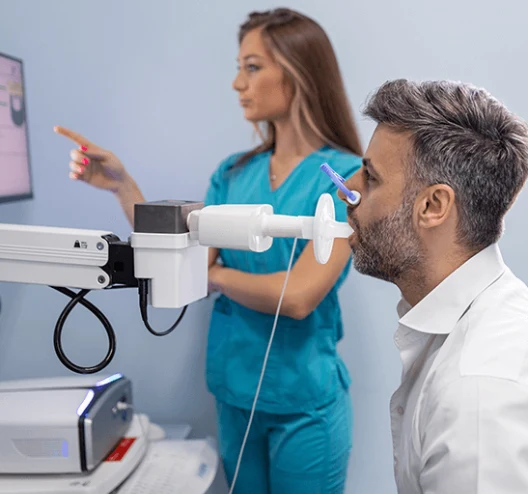
Types of Pulmonary Function Tests:
- Spirometry
-
Peak Expiratory Flow Rate (PEFR)
-
Body Plethysmography
-
Diffusion Lung Capacity
-
Cardio-Pulmonary Exercise Testing
-
6-Minute Walk Test
-
Arterial Blood Gas Analysis
Spirometry in COPD:
Spirometry is one of the best tools for diagnosing Chronic Obstructive Pulmonary Disease (COPD), which is commonly seen in smokers, biofuel users, and people exposed to air pollution. COPD is a progressive, potentially fatal disease, and early diagnosis through spirometry is essential.
While early symptoms of COPD may include coughing and sputum production, these are often overlooked, with many people only seeking medical attention once they experience shortness of breath, a late symptom of COPD.
Role of Spirometry:
- In COPD: Routine spirometry is vital in diagnosing COPD, especially in smokers, with annual testing recommended for those with abnormal results.
-
In Asthma: Spirometry is used to document airway function at initial diagnosis, after treatment, and periodically to monitor long-term control.
Spirometry’s Role in Smoking Cessation: Spirometry-assisted counseling is an excellent method for motivating smokers to quit, as it highlights the lung damage caused by smoking.
Peak Expiratory Flow Rate (PEFR):
PEFR is a simple test that measures how fast a person can exhale, helping assess lung function, especially in patients with asthma. The flow of air from the lungs may be restricted due to inflammation or mucus buildup.
Indications for PEFR:
- Bronchial Asthma: A 20% increase in PEFR after bronchodilator use is diagnostic of asthma.
-
Monitoring Asthma: It helps in assessing the severity and controlling the disease.
-
Bedside Function Test: PEFR is also used for bedside monitoring of breathing difficulties and to detect asthma triggers.
Advantages of PEFR:
- Cost-effective and easy to use for all age groups (except for children ≤6 years old).
-
Portable, making it ideal for industrial workers to diagnose occupational asthma.
-
Non-invasive and simple, so it can be used in community health centers along with basic measurements like height and weight.
Impulse Oscillometry (IOS):
While spirometry is widely used for lung function tests, some patients, particularly children under 5, elderly individuals, or those with physical limitations, may have difficulty performing the required maneuvers.
Advantages of IOS:
- Simple Breathing Maneuvers: Unlike spirometry, IOS requires minimal effort, making it easier for patients of all ages to perform.
-
Superior Sensitivity: IOS is more sensitive than spirometry in detecting peripheral airway obstruction, especially in early stages of asthma or COPD.
-
Suitable for Ventilator Patients: IOS can be performed on patients receiving mechanical ventilation and even during sleep.
-
Predicting Disease Progression: IOS is better at detecting early changes in lung function, making it useful for identifying early airway disease in smokers and predicting asthma flare-ups.